
10 Best Free Blogging Sites to Start Your Writing Journey in 2026
10 Best Free Blogging Sites to Start Your Writing Journey in 2026
Apr 26, 2026
Why Free Blogging Platforms Are Still Relevant Today

Why Free Blogging Platforms Are Still Relevant Today
Blogging has come a long way from being a simple online diary. Today, it’s a powerful tool for building a brand, sharing knowledge, and even generating income. But here’s the thing—despite the explosion of premium tools and paid platforms, free blogging sites are still incredibly relevant in 2026. Why? Because they remove the biggest barrier to entry: cost.
Think about it. If you’re just starting out, do you really want to invest money before knowing whether blogging is right for you? Probably not. Free platforms let you experiment, learn, and grow without financial pressure. They act like a testing ground where you can figure out your niche, voice, and audience. It’s like learning to ride a bike with training wheels—you get stability before going full speed.
Another reason free blogging platforms thrive is accessibility. You don’t need coding skills, technical knowledge, or even much time to get started. Most platforms offer drag-and-drop editors, pre-designed templates, and intuitive dashboards. Within minutes, you can go from idea to published blog post.
There’s also a social aspect. Platforms like Medium and LinkedIn Articles come with built-in audiences, which means your content has a higher chance of being discovered without heavy promotion. That’s a huge advantage compared to self-hosted blogs where traffic depends entirely on your marketing efforts.
Interestingly, recent trends show that over 60% of new bloggers start on free platforms before transitioning to paid solutions later. That statistic alone highlights how crucial these platforms are in the blogging ecosystem.
Free doesn’t mean limited—it means strategic. When used correctly, these platforms can become stepping stones to something much bigger.
The Rise of Content Creators and Personal Branding
We’re living in what many call the “creator economy,” and blogging is right at the center of it. People aren’t just writing for fun anymore—they’re building personal brands, businesses, and entire careers through content. And guess what? Most of them started small, often on free blogging platforms.
Personal branding is no longer optional. Whether you’re a freelancer, entrepreneur, or even a job seeker, your online presence matters. A blog acts as your digital home—a place where people can understand who you are, what you know, and why they should trust you. It’s like your portfolio, resume, and voice all rolled into one.
Free blogging sites make this process incredibly accessible. You don’t need to hire a web developer or spend weeks building a site. Instead, you can focus on what truly matters: creating valuable content. That’s where the magic happens.
Another interesting shift is how audiences consume content today. People crave authenticity. They want real stories, honest opinions, and relatable experiences. Free platforms, especially ones like Medium and Substack, encourage this kind of writing. They prioritize content over flashy design, which levels the playing field for new creators.
Let’s not ignore the algorithm factor either. Platforms with built-in audiences often promote quality content through recommendation systems. This means your blog post could reach thousands—even if you’re just starting out. It’s like having a silent marketing team working behind the scenes.
And here’s a powerful insight: many successful bloggers earning six figures today started with free platforms. They didn’t wait for perfection. They started with what they had.
So if you’re thinking about blogging, don’t overcomplicate it. The tools are already there. The audience is waiting. The only question is—are you ready to show up?
Free vs Paid Blogging Platforms: What’s the Real Difference?
At first glance, free and paid blogging platforms might seem worlds apart. But when you dig deeper, the difference isn’t as dramatic as you might think—especially in the early stages of blogging.
Free platforms are all about simplicity and accessibility. You sign up, choose a template, and start writing. There’s no need to worry about hosting, security, or maintenance. Everything is handled for you. It’s like renting an apartment—you can move in quickly, but you don’t have full control over the space.
Paid platforms, on the other hand, offer ownership and flexibility. When you invest in a self-hosted blog, you control everything—from design to monetization. It’s more like owning a house. You can customize it however you want, but you’re also responsible for upkeep.
One major difference lies in branding. Free platforms often include their own domain in your URL (like yourblog.wordpress.com), which can look less professional. Paid platforms allow you to use custom domains, giving your blog a more polished appearance.
Monetization is another key factor. While some free platforms allow limited monetization, they often come with restrictions. Paid platforms open the door to multiple income streams—ads, affiliate marketing, digital products, and more.
But here’s the catch: most beginners don’t need all those advanced features right away. Starting with a free platform helps you focus on content creation rather than technical details.
Interestingly, many experienced bloggers recommend starting free and upgrading later. Why? Because it reduces risk. You can validate your idea, build an audience, and develop consistency before investing money.
So the real difference isn’t just about features—it’s about timing. Free platforms are perfect for starting. Paid platforms are ideal for scaling.
And if you play your cards right, you can transition smoothly from one to the other without losing momentum.
Key Features to Look for in a Free Blogging Site
Choosing a blogging platform isn’t just about picking the most popular name you’ve heard. It’s about finding a tool that actually fits the way you think, write, and grow.
The truth is, not all free blogging platforms are built the same. Some prioritize simplicity, others focus on design, and a few are tailored for monetization. So how do you decide?
It helps to think of your blog like a digital home. You want something that’s easy to move into, comfortable to live in, and flexible enough to evolve as your needs change. If a platform feels restrictive from day one, it’s probably not the right fit. On the flip side, if it overwhelms you with too many options, you might spend more time figuring things out than actually writing.
Another overlooked factor is scalability. Even if you’re starting small, you should consider where you want your blog to be in six months or a year. Will the platform grow with you? Or will you have to migrate everything later, which can be messy and time-consuming?
Security and reliability also matter more than people think. Free platforms usually handle these aspects for you, which is a big advantage. You don’t want to wake up one day and realize your content is gone or your site is down.
Ultimately, the best platform is the one that removes friction. It should make publishing feel effortless, not like a chore. Because at the end of the day, consistency beats perfection—and the easier it is to show up and write, the more likely you are to succeed.
Ease of Use and Setup
Let’s be honest—if a platform is complicated, you’re less likely to stick with it. That’s why ease of use should be at the top of your priority list when choosing a free blogging site. You want something that feels intuitive from the moment you sign up.
Most modern platforms have embraced simplicity, but there are still differences.
Some offer clean dashboards with minimal distractions, while others come packed with features that can feel overwhelming. If you’ve ever opened a tool and thought, “Where do I even start?”—you know exactly what I mean.
The ideal blogging platform should let you go from idea to published post in minutes. No coding. No confusing settings. Just a straightforward writing experience. Platforms like Medium and Substack excel here because they strip away everything unnecessary and focus purely on content creation.
Another important aspect is the onboarding process. A good platform guides you through the basics—setting up your profile, choosing a theme, and publishing your first post. It’s like having a built-in tutorial that gets you moving very fast.
Mobile usability is also worth considering. Many bloggers write on the go, so having a responsive interface or dedicated app can make a huge difference. Imagine getting a burst of inspiration while commuting—you want to capture that idea instantly, not wait until you’re back at your desk.
In short, the easier it is to use, the more likely you are to keep using it. And in blogging, consistency is everything.
Customization and Design Flexibility
Now let’s talk about looks. Because whether we like it or not, first impressions matter—especially online. When someone lands on your blog, the design plays a huge role in whether they stay or leave.
Free blogging platforms vary widely in terms of customization. Some offer dozens of templates and drag-and-drop builders, while others keep things minimal and standardized. Neither approach is inherently better—it depends on your goals.
If you want a unique brand identity, platforms like Wix and WordPress.com give you more control over design. You can tweak layouts, colors, fonts, and even add custom elements. It’s like decorating your own apartment—you get to express your personality.
On the other hand, platforms like Medium intentionally limit customization. Why? Because they prioritize readability and consistency. Every blog looks clean and professional, but you sacrifice individuality. It’s a trade-off: simplicity versus control.
Another factor to consider is responsiveness. Your blog should look good on all devices—phones, tablets, and desktops. Most modern platforms handle this automatically, but it’s still worth checking.
Here’s the key insight: design should enhance your content, not distract from it. A flashy layout won’t save a weak article, but a clean, user-friendly design can elevate strong writing.
So ask yourself—do you want creative freedom, or do you prefer a polished, no-fuss look? Your answer will guide your choice.
Monetization Opportunities
Let’s address the elephant in the room—can you actually make money with free blogging platforms? The answer is yes, but with some limitations.
Monetization is where free and paid platforms start to diverge. Free platforms often have rules about how you can earn money. For example, some may restrict ads, while others take a percentage of your earnings. It’s not a dealbreaker, but it’s something you need to understand upfront.
That said, there are still plenty of opportunities. Platforms like Substack allow you to charge for subscriptions, turning your blog into a newsletter-based business.
Medium has a Partner Program that pays writers based on engagement. Even WordPress.com offers basic monetization options on free plans.
Here are a few common ways bloggers earn money on free platforms:
- Affiliate marketing (promoting products and earning commissions)
- Sponsored content (working with brands)
- Paid subscriptions or memberships
- Selling digital products like eBooks or courses
The key is to focus on building an audience first. Monetization comes later. Think of it like planting a tree—you don’t get fruit immediately, but with time and care, it grows.
Another important point is ownership. On free platforms, you don’t fully control your audience. If the platform changes its rules or shuts down, your income could be affected. That’s why many bloggers eventually transition to self-hosted sites.
Still, for beginners, free platforms offer a low-risk way to test monetization strategies. You can experiment, learn what works, and refine your approach before scaling up.
10 Best Free Blogging Sites (Detailed Review)
1. WordPress.com
If blogging platforms were a popularity contest, WordPress.com would consistently rank near the top—and for good reason. It powers a significant portion of the internet, and even its free version offers a solid foundation for beginners.
What makes WordPress.com stand out is its balance between simplicity and functionality. You don’t need technical skills to get started, yet you still get access to a range of features that help your blog grow. The interface is user-friendly, and the setup process is straightforward, allowing you to launch your blog in minutes.
One of its biggest strengths is the variety of themes available. Even on the free plan, you can choose from multiple designs that look clean and professional. This gives your blog a polished feel without requiring design expertise.
However, there are limitations. Your domain will include “wordpress.com,” and customization options are somewhat restricted unless you upgrade. Monetization is also limited on the free plan, which can be frustrating if you’re looking to earn early.
Despite these drawbacks, WordPress.com remains a fantastic starting point. It’s reliable, scalable, and widely supported. Many successful bloggers began here before moving to self-hosted WordPress.org sites.
Think of it as a training ground. You learn the basics, build content, and gain confidence—all without spending a dime.
2. Blogger
Blogger is one of the oldest blogging platforms still in use, and while it may not be the trendiest option, it’s far from obsolete. Owned by Google, it offers a level of reliability and integration that’s hard to beat.
One of Blogger’s biggest advantages is its simplicity. The platform is बेहद straightforward, making it ideal for beginners who want a no-frills blogging experience. You can set up a blog quickly, choose a basic template, and start publishing immediately.
Another benefit is its integration with Google services. From AdSense to Analytics, everything connects seamlessly. This makes it easier to track performance and even monetize your blog through ads.
Customization options are somewhat limited compared to newer platforms, and the design templates can feel outdated. However, for those who prioritize functionality over aesthetics, this may not be a major issue.
Blogger also gives you a bit more control than some other free platforms. You can use a custom domain if you choose, which adds a level of professionalism.
While it may not have the buzz of modern platforms, Blogger still holds its ground as a reliable, beginner-friendly option. It’s like an old car that keeps running—maybe not flashy, but dependable.
3. Wix
If you’ve ever wanted to design a blog without touching a single line of code, Wix might feel like a breath of fresh air. It’s one of those platforms that turns the intimidating process of building a website into something surprisingly fun and interactive. Instead of dealing with rigid templates, Wix gives you a drag-and-drop builder that lets you visually create your blog exactly the way you imagine it.
The biggest strength of Wix lies in its design flexibility. You’re not boxed into a predefined layout. Want to move an image slightly to the left? Done. Prefer a bold header with layered text? Easy. It’s almost like using a digital canvas where your creativity drives the structure. For bloggers who care about branding and aesthetics, this level of control is incredibly appealing.
That said, this freedom comes with a trade-off. Too many options can sometimes slow you down, especially if you’re new to website building. You might spend hours tweaking design elements instead of writing content. So while Wix is beginner-friendly, it still requires a bit of discipline to stay focused on what matters—publishing consistently.
On the free plan, Wix displays ads and uses a branded domain, which can make your blog feel less professional. Monetization options are also somewhat restricted unless you upgrade. However, for testing ideas or building a visually stunning blog portfolio, it’s more than capable.
Another advantage is Wix’s built-in SEO tools. While not as advanced as dedicated SEO platforms, they guide you through basics like meta tags, keywords, and mobile optimization. For beginners, this is a huge plus.
In essence, Wix is perfect if you want your blog to stand out visually without hiring a designer. It’s flexible, creative, and powerful—just don’t let the design rabbit hole distract you from actually writing.
4. Medium
Medium flips the traditional blogging model on its head. Instead of focusing on design, customization, or even ownership, it puts content and storytelling front and center. And honestly, that’s exactly why so many writers love it.
When you publish on Medium, you’re not just posting into the void. You’re tapping into an existing ecosystem of readers who are actively looking for quality content. The platform’s algorithm recommends articles based on user interests, which means your post could reach thousands—even if you have zero followers. That kind of organic exposure is hard to find elsewhere.
The writing experience itself is beautifully minimal. No clutter, no distractions—just a clean editor that lets you focus on your words. It feels less like managing a website and more like simply writing and sharing ideas. For many creators, this simplicity is liberating.
However, Medium’s biggest strength is also its biggest limitation. You don’t truly own your platform. There’s no customization, no unique branding, and limited control over how your content is presented. Your blog looks like everyone else’s—and that’s by design.
Monetization comes through the Medium Partner Program, where you earn based on reader engagement. While some writers make a decent income, it’s not guaranteed and depends heavily on consistency and quality.
Medium is ideal for writers who care more about reach than control. If your goal is to build an audience quickly and focus purely on writing, it’s one of the best free platforms available.
5. Substack
If blogging and email newsletters had a child, it would look a lot like Substack. This platform has exploded in popularity, especially among writers who want a more direct relationship with their audience.
What makes Substack unique is its focus on subscriptions. Instead of relying on ads or traffic, you can earn money by offering paid content to your readers. It’s a simple but powerful model—write valuable content, build trust, and get paid directly by your audience.
Setting up a Substack is बेहद आसान. You don’t need technical skills or design knowledge. The platform handles everything from hosting to email delivery. When you publish a post, it automatically gets sent to your subscribers’ inboxes. It’s blogging and email marketing rolled into one.
The downside? Customization is minimal. Like Medium, Substack prioritizes simplicity over design flexibility. Your publication will have a clean, standard look, but you won’t be able to tweak it extensively.
Another thing to consider is audience building. While Substack does have some discovery features, it’s not as strong as Medium’s algorithm. You’ll need to promote your newsletter actively to grow your subscriber base.
Still, for writers who want to monetize early and build a loyal audience, Substack is a game-changer. It shifts the focus from chasing page views to creating meaningful connections.
6. Weebly
Weebly often flies under the radar, but it’s a solid choice for beginners who want a straightforward blogging experience with a touch of website-building capability. Owned by Square, it combines blogging tools with eCommerce features, making it surprisingly versatile.
The platform uses a drag-and-drop builder similar to Wix, but it’s generally simpler and less overwhelming. You can create pages, add blog posts, and customize layouts without feeling lost. It strikes a nice balance between functionality and ease of use.
Weebly’s templates are clean and responsive, ensuring your blog looks good on all devices. While the design options aren’t as extensive as Wix, they’re more than enough for most beginners.
One standout feature is its integration with Square’s payment system, which makes it easier to sell products or services directly from your blog. This opens up additional monetization opportunities, even on a basic level.
On the free plan, you’ll still face limitations like branded domains and ads. But for testing ideas or building a small blog-business hybrid, Weebly does the job well.
Think of it as a middle ground—more flexible than Medium, but less complex than full-scale website builders.
7. Ghost (Free Trial & Open Source)
Ghost is often described as a modern alternative to WordPress, but with a sharper focus on publishing and performance. It’s sleek, fast, and designed for serious writers who want a professional feel.
Now, here’s the catch—Ghost isn’t entirely free in the traditional sense. The hosted version requires payment, but the open-source version can be used for free if you’re willing to handle hosting yourself. That makes it a bit more technical than other platforms on this list.
What sets Ghost apart is its clean interface and powerful publishing tools. It supports memberships, subscriptions, and SEO optimization out of the box. If you’re thinking long-term and want a platform that can scale with you, Ghost is worth considering.
The writing experience is perfect—simple, fast, and distraction-free. It feels like a tool built specifically for writers, not general website users.
However, beginners might find it intimidating. Setting up the open-source version requires some technical knowledge, which can be a barrier.
Ghost is best suited for those who are serious about blogging as a business and don’t mind a bit of a learning curve.
8. Tumblr
Tumblr is a bit of a wild card in the blogging world. It’s part blogging platform, part social network, and part creative playground. If traditional blogging feels too rigid, Tumblr offers a refreshing alternative.
The platform is बेहद casual and encourages short-form content—text posts, images, GIFs, and even memes. It’s less about long, structured articles and more about self-expression and community interaction.
One of Tumblr’s biggest strengths is its built-in social features. You can follow other users, reblog content, and engage with a community that shares your interests. This makes it easier to gain visibility without heavy promotion.
Customization is surprisingly flexible. You can tweak themes and layouts to create a unique look, although it may require some basic HTML knowledge for advanced changes.
Monetization isn’t Tumblr’s strong suit. It’s not designed for making money, so if that’s your goal, you might want to consider other platforms.
Still, for creative bloggers who want freedom and community, Tumblr offers something different—and sometimes, different is exactly what you need.
9. LinkedIn Articles
When people think of blogging platforms, LinkedIn isn’t always the first name that comes to mind—but maybe it should be. Especially if your focus is professional content.
Publishing articles on LinkedIn allows you to tap into a network of professionals, recruiters, and industry leaders. It’s not just blogging—it’s strategic visibility. Your content can directly impact your career opportunities.
The platform is simple to use, with a clean editor and built-in audience. You don’t need to worry about SEO or promotion as much because your network already acts as a distribution channel.
However, customization is virtually nonexistent. You’re writing within LinkedIn’s ecosystem, so branding is limited.
Monetization is indirect. Instead of earning through ads or subscriptions, you gain opportunities—clients, jobs, partnerships.
For professionals, this can be far more valuable than traditional blogging income.
10. Strikingly
Strikingly is designed for simplicity, particularly for one-page websites and minimalist blogs. If you want to create something clean and quick, it’s a strong contender.
The platform focuses on ease of use. You can build a site in minutes using pre-designed sections and layouts. It’s perfect for personal blogs, portfolios, or small projects.
Customization is somewhat limited, but that’s intentional. Strikingly prioritizes speed and simplicity over complexity.
On the free plan, you’ll encounter branding and feature restrictions, but it’s still a great starting point.
It’s not the most powerful platform on this list, but it’s efficient—and sometimes, that’s exactly what you need.
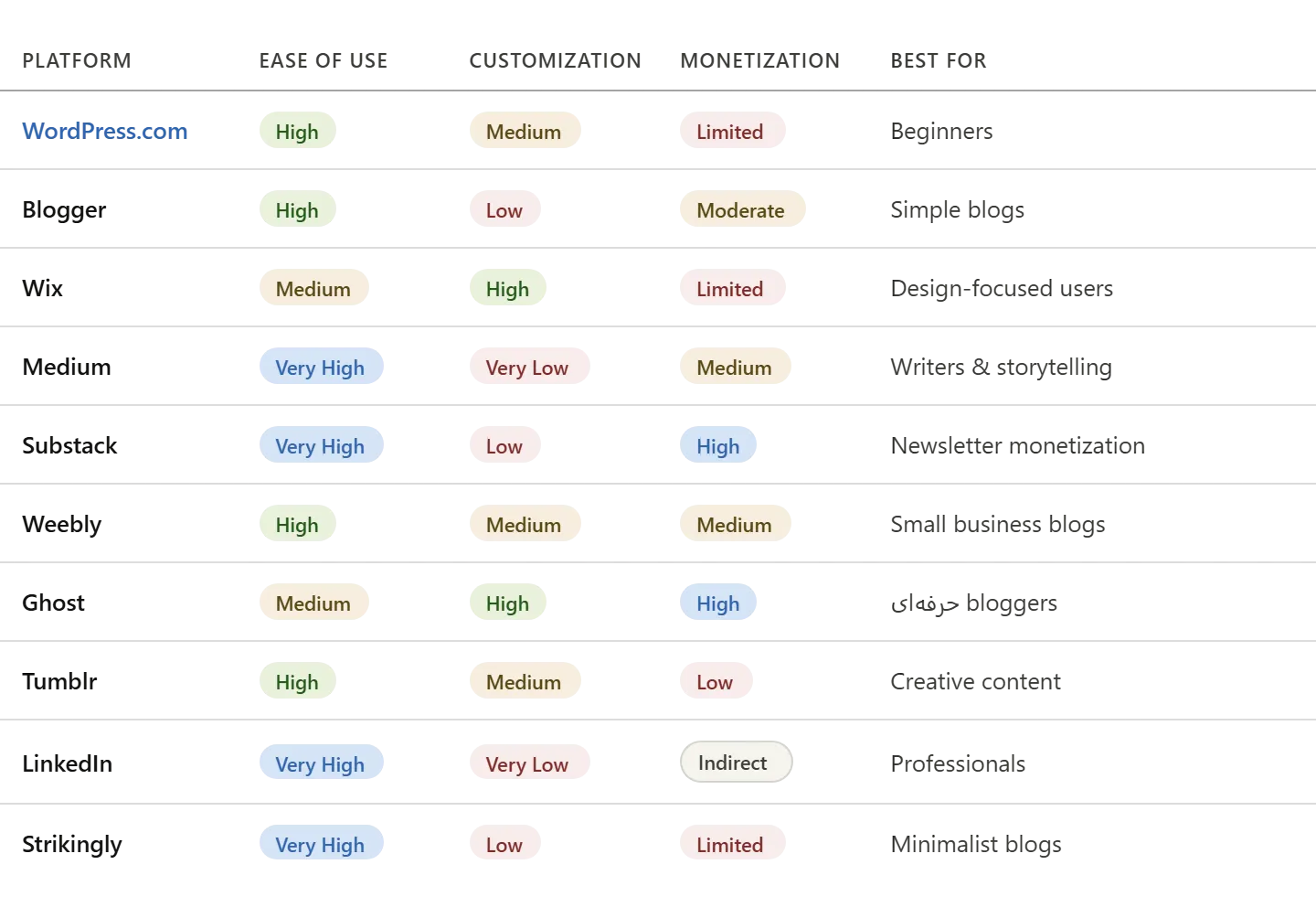
Comparison Table of the Best Free Blogging Platforms
| Platform | Ease of Use | Customization | Monetization | Best For |
|---|---|---|---|---|
| WordPress.com | High | Medium | Limited | Beginners |
| Blogger | High | Low | Moderate | Simple blogs |
| Wix | Medium | High | Limited | Design-focused users |
| Medium | Very High | Very Low | Medium | Writers & storytelling |
| Substack | Very High | Low | High | Newsletter monetization |
| Weebly | High | Medium | Medium | Small business blogs |
| Ghost | Medium | High | High | حرفهای bloggers |
| Tumblr | High | Medium | Low | Creative content |
| Very High | Very Low | Indirect | Professionals | |
| Strikingly | Very High | Low | Limited | Minimalist blogs |
Which Free Blogging Platform Is Right for You?
Choosing the “best” blogging platform sounds simple—until you realize it completely depends on what you actually want to achieve. There’s no universal winner here. The right platform is the one that aligns with your goals, your workflow, and your long-term vision. Think of it like choosing a pair of shoes. The best running shoes aren’t necessarily the best for hiking, right?
Some people jump into blogging with the intention of making money quickly. Others just want a creative outlet. And then there are those who see blogging as a stepping stone to something bigger—like building a personal brand or launching a business. Each of these paths requires a different kind of platform.
Another factor people often overlook is commitment level. Are you testing the waters, or are you ready to publish consistently for months (or years)? If you’re experimenting, a simple platform like Medium or Blogger might be perfect. But if you’re thinking long-term, something scalable like WordPress.com or Ghost makes more sense.
Also, consider how much control you want. Do you care about owning your content, customizing your design, and building a standalone brand? Or are you okay with publishing within someone else’s ecosystem in exchange for built-in traffic?
Here’s the honest truth: most successful bloggers don’t get it perfect on their first try. They start somewhere, learn what works, and adjust along the way. So instead of overthinking it, focus on getting started with a platform that feels easy and intuitive.
Because at the end of the day, the platform doesn’t make the blogger—the consistency and quality of content do.
Best for Beginners
If you’re completely new to blogging, your priority should be simplicity. You don’t want to spend hours figuring out settings, plugins, or design tweaks. You want to write, hit publish, and feel that sense of momentum.
That’s where platforms like Medium, Blogger, and WordPress.com shine. They remove almost all technical barriers and let you focus on content. Medium is especially appealing because it gives you immediate access to an audience. You don’t need to worry about traffic—it’s already there.
Blogger is another solid option if you prefer something बेहद straightforward. It may not be flashy, but it’s reliable and easy to use. WordPress.com sits somewhere in the middle, offering a bit more flexibility while still being beginner-friendly.
The key here is to avoid overwhelm. Many beginners quit not because they lack ideas, but because the process feels complicated. A simple platform keeps you in the game long enough to build confidence.
So if you’re just starting out, don’t chase perfection. Choose ease. Choose speed. Choose something that lets you publish your first post today—not next week.
Best for Monetization
Let’s talk about making money—because for many bloggers, that’s the ultimate goal. While free platforms have limitations, some are definitely better than others when it comes to monetization.
Substack is arguably the strongest contender here. It allows you to charge for subscriptions, meaning you can start earning directly from your audience without relying on ads. This model works особенно well if you can provide unique insights, niche expertise, or exclusive content.
Medium also offers monetization through its Partner Program. While it won’t make you rich overnight, it provides a way to earn based on engagement. The more people read and interact with your content, the more you can earn.
WordPress.com and Wix offer monetization options too, but they’re somewhat restricted on free plans. You may need to upgrade to unlock their full potential.
Here’s something important to understand: monetization isn’t just about the platform—it’s about your content strategy. Even the best tools won’t help if you’re not creating value.
Start by building trust and audience. Once people see you as a reliable source, monetization becomes much easier.
Best for Professional Writers
If you’re serious about writing—like, really serious—your needs are a bit different. You’re not just blogging for fun; you’re building authority, credibility, and possibly a career.
Platforms like Medium, Ghost, and LinkedIn Articles stand out in this category. Medium gives you reach. Ghost gives you control. LinkedIn gives you professional exposure.
Ghost, in particular, is powerful for writers who want to build a brand and monetize through memberships. It’s clean, fast, and designed for publishing. LinkedIn, on the other hand, connects your writing directly to career opportunities.
Professional writers often prioritize audience quality over quantity. It’s not just about getting views—it’s about reaching the right people.
So if your goal is to be taken seriously in your field, choose a platform that aligns with that vision.
Common Mistakes to Avoid When Starting a Free Blog
Starting a blog feels exciting—like opening a blank notebook full of possibilities. But here’s the catch: most beginners make the same mistakes, and those mistakes can slow down progress or even lead to quitting altogether.
One of the biggest mistakes is overthinking the platform. People spend days (sometimes weeks) comparing options instead of actually writing. The truth? Your first platform won’t be your last. It’s okay to start simple and switch later.
Another common issue is inconsistency. Blogging isn’t about posting one great article and disappearing. It’s about showing up regularly. Even one post per week can build momentum over time.
Then there’s the trap of perfectionism. You might feel like your blog needs the perfect design, logo, or niche before you start. It doesn’t. Your first posts won’t be perfect—and they don’t need to be.
Ignoring SEO is another mistake. Even on free platforms, basic optimization can make a difference. Use clear titles, relevant keywords, and structured content to improve visibility.
And finally, many bloggers focus too much on traffic and not enough on value. Instead of chasing clicks, focus on helping your readers. Answer their questions. Solve their problems. That’s what builds loyalty.
Avoid these mistakes, and you’ll already be ahead of most beginners.
Conclusion
Free blogging platforms have leveled the playing field in ways that were unimaginable a decade ago. You no longer need a budget, technical skills, or a team to share your voice with the world. All you need is an idea and the willingness to start.
Each platform we’ve explored has its own strengths and limitations. Some prioritize simplicity, others focus on design, and a few are built for monetization. The key is to choose one that aligns with your current goals—not some distant, hypothetical version of success.
Blogging is less about the tools and more about the habit. The more you write, the better you get. The more you publish, the more you learn. And over time, those small efforts compound into something meaningful.
So pick a platform, create your first post, and hit publish. Don’t wait for the perfect moment—it doesn’t exist.
FAQs
1. Can I really start a blog for free?
Yes, many platforms like WordPress.com, Medium, and Blogger allow you to start blogging without any cost. However, free plans may include limitations such as branding and restricted features.
2. Which free blogging platform is best for beginners?
Medium and Blogger are उत्कृष्ट choices for beginners due to their simplicity and ease of use. WordPress.com is also a strong option if you want a bit more flexibility.
3. Can I make money from free blogging sites?
Yes, but with limitations. Platforms like Substack and Medium offer built-in monetization, while others may require upgrades for full earning potential.
4. Do I need technical skills to start a blog?
No, most free blogging platforms are designed for non-technical users. You can set up and publish content without coding knowledge.
5. Should I switch to a paid platform later?
If you’re serious about blogging long-term, upgrading to a paid platform can offer more control, customization, and monetization options.
.🔍 Want to find the best keywords and rank this article faster? Try the #1 SEO & AI visibility toolkit free for 14 Days
. Track your keyword rankings, audit your site, and monitor your AI search visibility on ChatGPT, Gemini & Google AI Overviews
👉 Try Pro Article Writer (Free)
— Generate, Edit, and Humanize at scale.
⭐ If this GPT helped you, please leave a rating on the GPT Store!
Explore more on my Patreon
Read also:
⭐ How to create a video... in under 5 minutes
⭐ Start blogging with us: A Beginner-Guide Path
⭐ 10 Best Free Blogging Sites to Start Your Writing Journey in 2026
⭐
⭐
⭐
⭐